3D printing vs. CNC: when each makes sense
A comparison of cost, accuracy and speed when prototyping small machine parts.
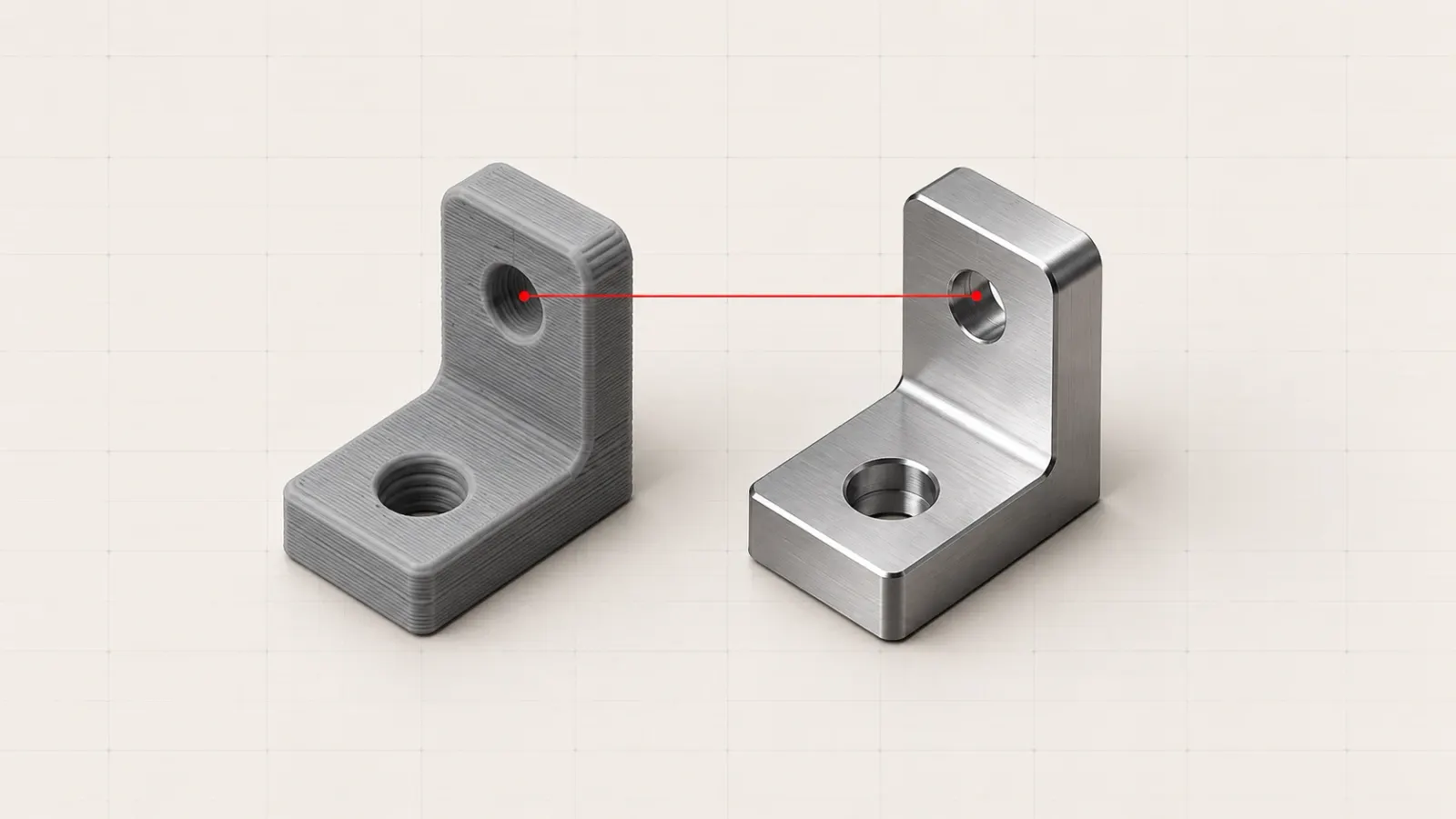
With every new prototype we face the same question: print or mill? The answer depends on exactly what the prototype is for.
When to choose 3D printing (FDM/SLA)
FDM printing in PLA or PETG is ideal for verifying geometry — shape, installation dimensions and ergonomics. A plastic part costs an order of magnitude less than one in aluminium, and lead times are measured in hours, not days. SLA printing adds a finer surface finish and better dimensional accuracy — well suited to assembly trials.
- Geometry verification (fit & form)
- Installation models for the customer
- Fast iterations before the final design
- Non-load-bearing housing or cover parts
When to choose CNC
As soon as a prototype needs functional properties — precise fits, sealing surfaces, resistance to load — CNC is the only way. Tolerances of ±0.05 mm, which FDM cannot achieve, are standard for CNC. The material is the same as in series production, so test results transfer directly.
Bottom line: 3D printing for visual and geometric verification, CNC for functional testing and fine-tuning tolerances.