How to choose the right steel for your fixture
An overview of common engineering steels and when to choose which — from S235 to tool steels.
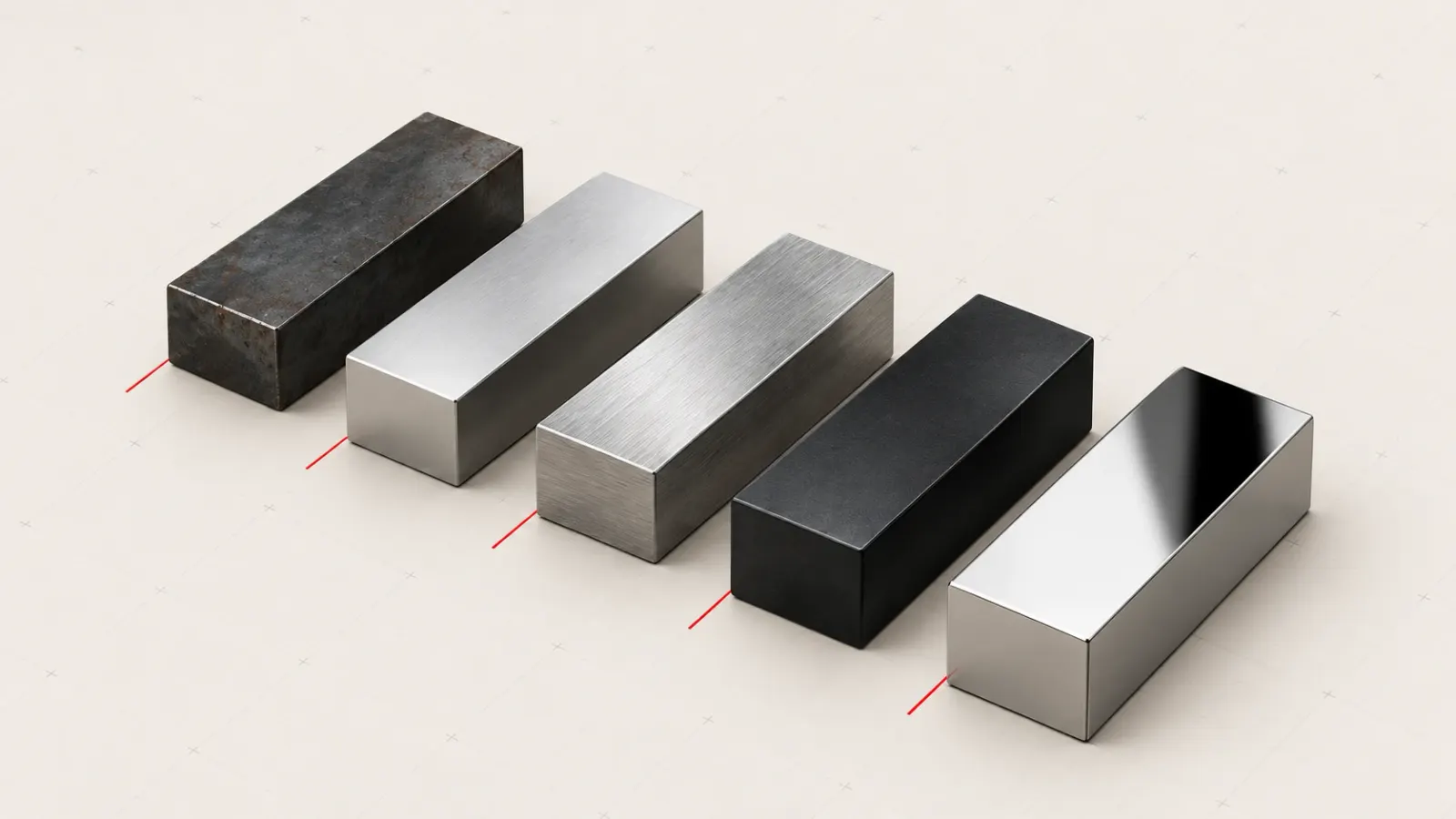
Choosing the material is one of the first and most important decisions when designing a fixture. The wrong material costs time, money and, in the worst case, operator safety.
S235 and S355 — structural steels
For fixture bodies with no special requirements for hardness or wear resistance, S235 and S355 are the typical choice. They are easy to machine and weld, and they are affordable. S355 has a higher yield strength — useful if you need thinner walls under the same load.
C45 and 42CrMo4 — hardenable steels
If the fixture includes guide elements, fits or seating surfaces that must resist wear, reach for C45 or 42CrMo4. Both can be quenched and tempered to 40–50 HRC. 42CrMo4 suits dynamically loaded parts — it is tougher than C45.
- S235/S355: fixture body, brackets, base plates
- C45: guide pins, tool shanks, clamping screws
- 42CrMo4: shafts, gearing, dynamically loaded pins
- 1.2379: punches, blanking punches, forming dies
Tool steels — for special applications
Tool steels of the 1.2xxx series are intended for cutting, shearing and forming tools. 1.2379 is the standard for punches and dies — 58–62 HRC hardness and minimal wear even in large series.
Rule of thumb: the higher the hardness requirement, the more demanding the machining before hardening. Always plan heat treatment before final grinding.