5 drawing mistakes that cost thousands
The most common problems in engineering drawings that cause confusion on the shop floor.
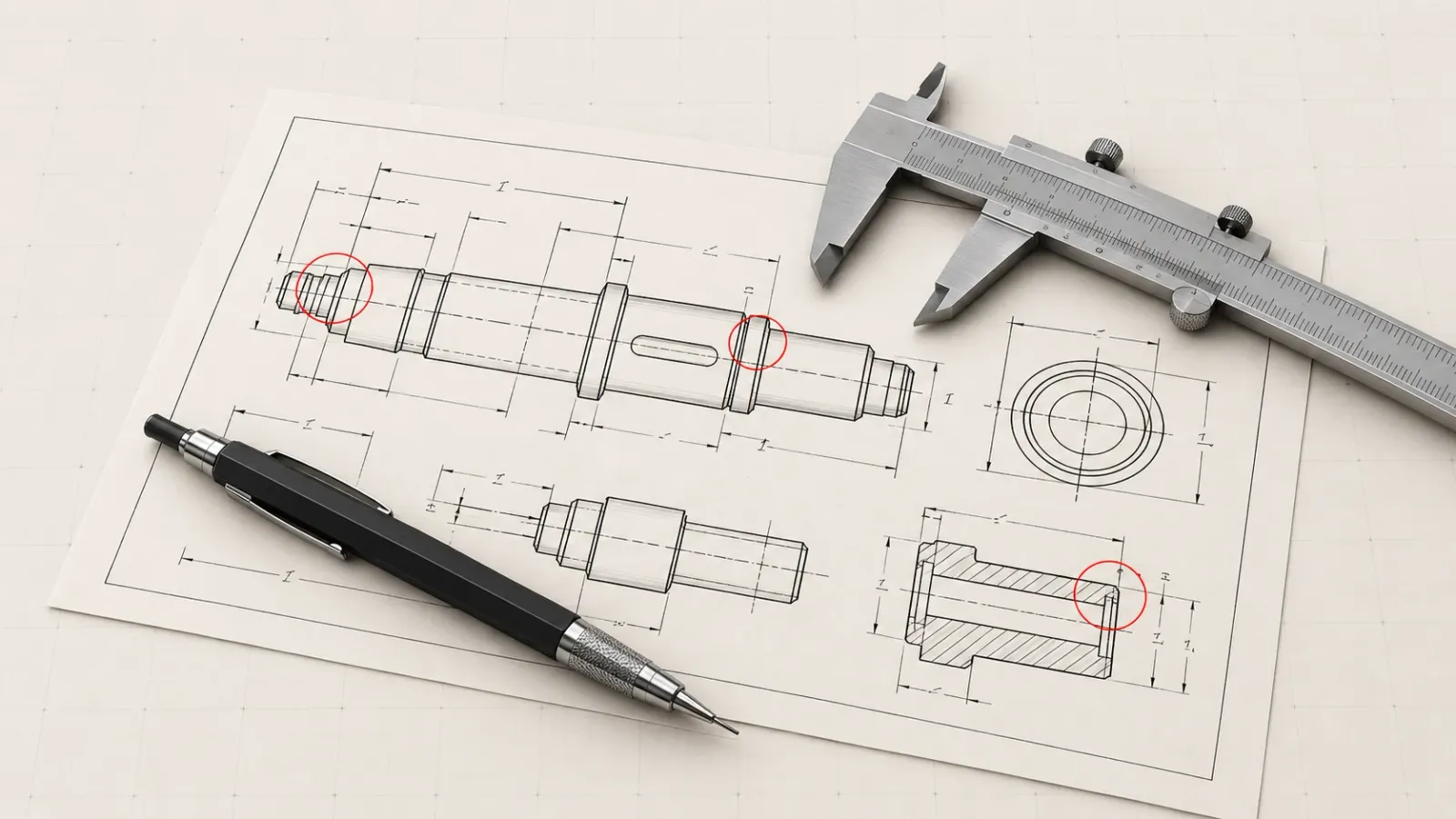
A drawing is a contract between the designer and the workshop. Every ambiguity in it turns into either a phone call or confusion — and both cost time and money.
1. Insufficient tolerancing
Without tolerances, ISO 2768-m applies. The problem arises when the workshop doesn't know which standard applies, or when the designer assumes tighter tolerances. Every functional surface needs an explicit tolerance.
2. Missing surface roughness
If the drawing doesn't specify roughness (Ra), the workshop machines to whatever roughness its process naturally produces. For sealing surfaces, that's a disaster. Always specify Ra for every functional surface.
3. Geometric tolerances without a datum
A GD&T tolerance without a clear datum is worthless. The workshop will choose a datum itself — and it may not be the one you had in mind.
4. Vague material specifications
"Steel, hardened" is not a specification. State the material standard (e.g. 42CrMo4+QT to EN 10083-3) and the required hardness (e.g. 42–46 HRC to ISO 6508-1).
5. Revisions not updated
The workshop made the part to an old version of the drawing. You changed it but forgot to update the revision table. Always increment the revision, date the change and describe what changed — even for a minor correction.